

When teams step into a crime scene investigation, something interesting happens.
People stop thinking about job titles. They start focusing on solving the puzzle.
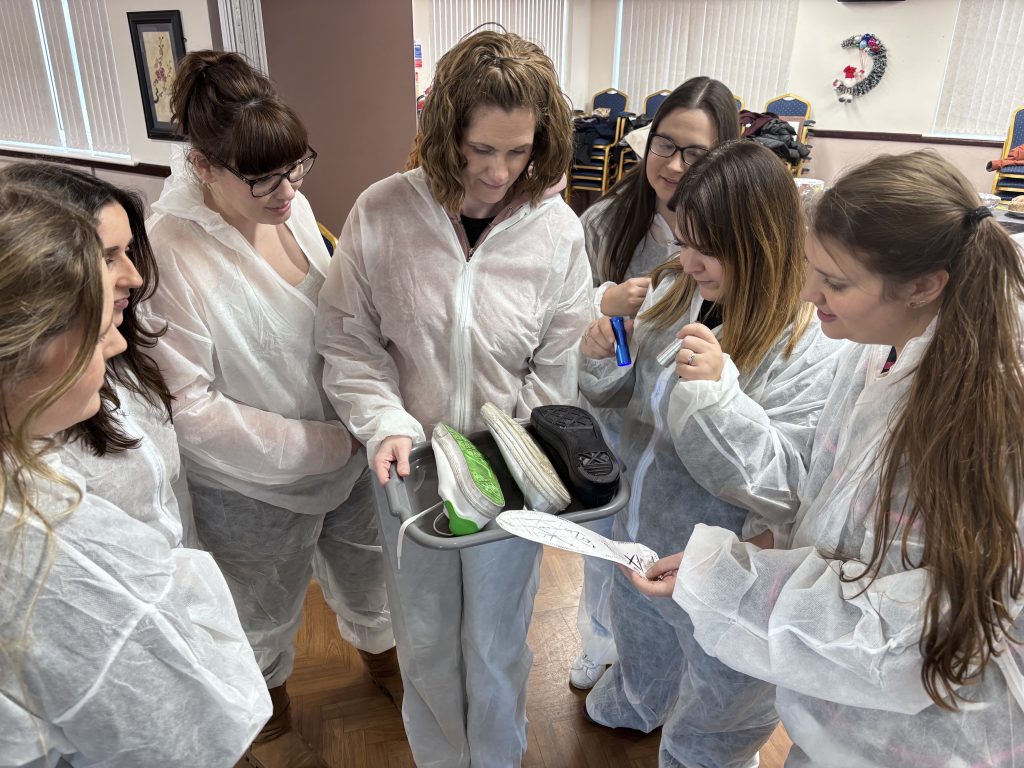
In our CSI team challenge workshops, participants work together to analyse evidence, examine clues and piece together what happened at the scene. It’s immersive, engaging and often great fun. But beneath the surface, something more powerful is happening.
Leadership traits begin to appear.
Not always from the people you might expect.
As a former Metropolitan Police Crime Scene Investigator, I spent 14 years observing how people respond to pressure, complexity and uncertainty. Those same behaviours emerge in our forensic team challenges, revealing strengths that often stay hidden in the normal workplace environment.
Here are some of the leadership traits I see come up in our forensic teambuilding workshops time and again.
The Natural Coordinator
In every group there is someone who instinctively steps back and looks at the bigger picture.
Rather than diving straight into collecting evidence, they begin organising the team. They allocate roles, suggest a logical process and keep everyone focused on the objective.
This kind of leadership isn’t about authority. It’s about clarity and direction.
In a forensic experience, where there are multiple clues to examine and time is limited, this skill becomes invaluable.
The Detail Detective
Some participants quietly notice the things everyone else misses.
A partial fingermark.
A misplaced object.
A small inconsistency in the evidence.
In real forensic work, attention to detail is everything. Every contact leaves a trace, and the smallest observation can change the direction of an investigation.
In the workshop environment, these individuals often become the key problem solvers, demonstrating how valuable careful observation can be in both investigations and business decision-making.
The Analytical Thinker
Forensic investigations rely heavily on logic.
The analytical thinkers in the group begin connecting the evidence together. They question assumptions, challenge conclusions and test different theories about what might have happened.
This ability to analyse information objectively is a core leadership skill in any organisation. It encourages teams to move beyond instinct and base decisions on evidence.
The Communicator
Clear communication becomes critical when teams are working under pressure.
Some participants naturally take on the role of communicator, ensuring everyone understands what has been discovered so far and what still needs investigating.
They help the group share information, avoid duplication and build a clearer picture of the events at the crime scene.
These individuals often emerge as informal leaders simply because they bring people together.
The Calm Problem Solver
Not everyone enjoys working against the clock.
But in our CSI challenges, time pressure often reveals those who remain calm and focused while others feel rushed.
These participants help steady the team, keep everyone thinking clearly and ensure the investigation continues to move forward.
In the workplace, this kind of calm decision making is invaluable during complex projects or challenging situations.
Why CSI Challenges Work So Well for Teams

Traditional teambuilding activities can sometimes feel artificial. A forensic investigation feels different.
There is a clear objective.
A compelling story.
A puzzle to solve together.
Because the challenge is immersive and realistic, people quickly become engaged. They focus on the task rather than worrying about how they are being perceived.
That’s when genuine leadership behaviours begin to emerge.
Teams often leave the session with a new appreciation of their colleagues’ strengths and a deeper understanding of how they work together.
A Unique Team Experience
The Forensic Experience is created and led by a former Metropolitan Police Crime Scene Investigator.
That means the activities at a team event are grounded in genuine forensic techniques and real investigative thinking. Participants don’t just play a game. They experience elements of how real crime scene investigations work.
From examining evidence to analysing clues, teams gain a hands-on insight into the world of forensic science while developing collaboration, communication and problem-solving skills.
It’s engaging, thought provoking and often surprising.
And above all, it brings teams together.
Bring the CSI Challenge to Your Team
If you are looking for a teambuilding experience that is immersive, memorable and genuinely valuable, a forensic challenge workshop could be exactly what your team needs.
To find out more or discuss your next team event, contact Hayley at The Forensic Experience.
Together you can create an unforgettable investigation for your team.